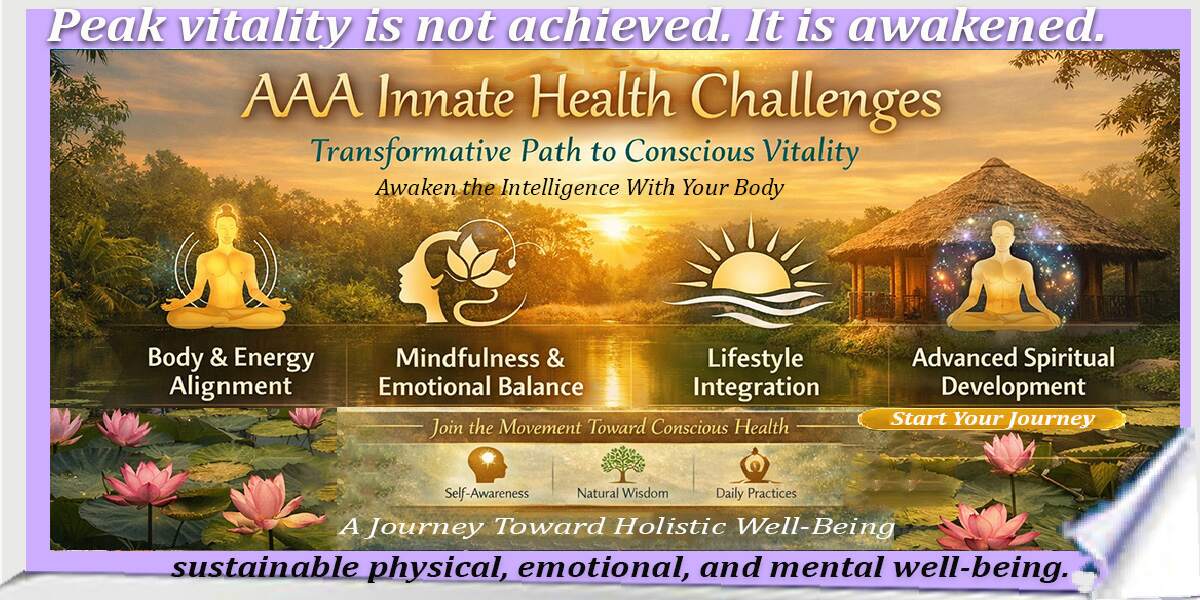
Innate Health Challenges of AAA Center
Evidence-Based Approaches to Diagnosis and Therapy
Awakening the Body’s Natural Intelligence for Lifelong Health, Healing, and Human Flourishing
Welcome to a New Understanding of Health
Health is one of humanity’s greatest aspirations. Across cultures, traditions, and generations, people have sought ways to live longer, feel better, prevent illness, and experience greater vitality. Yet despite remarkable advances in modern medicine, millions continue to struggle with chronic disease, stress, emotional distress, fatigue, lifestyle-related disorders, and a growing sense of disconnection from themselves and others.
At AAA Center—Anbu (Love), Amaithi (Peace), and Anandham (Bliss)—we believe that true health extends far beyond the treatment of symptoms. Health is not merely the absence of disease; it is a dynamic state of balance and harmony involving the body, mind, emotions, relationships, and consciousness.
The AAA Center approach is founded on the principle of Innate Health—the understanding that every human being possesses an inherent intelligence capable of supporting healing, adaptation, growth, resilience, and well-being. This innate capacity operates continuously within us, guiding countless biological, psychological, and social processes that sustain life.
However, modern lifestyles often create conditions that interfere with these natural capacities. Chronic stress, poor nutrition, sedentary habits, environmental pressures, social isolation, emotional burdens, and unhealthy behaviors can gradually weaken the body’s ability to maintain balance.
The purpose of AAA Center is to help individuals rediscover, strengthen, and activate their innate potential for health through evidence-based approaches to diagnosis, prevention, education, and therapeutic transformation.
This brochure explores the major health challenges confronting individuals today and presents the AAA Center framework for addressing them through a holistic and scientifically informed approach.
The Philosophy of Innate Health
The concept of Innate Health begins with a simple yet profound realization: the human body is naturally designed for balance, healing, and self-regulation.
Every moment, without conscious effort, the body:
- Regulates temperature
- Repairs damaged tissues
- Fights infection
- Maintains circulation
- Balances hormones
- Coordinates immune responses
- Supports emotional adaptation
- Learns and grows through experience
These remarkable processes reflect an intrinsic intelligence that works continuously to preserve life and well-being.
When this natural intelligence functions optimally, individuals experience:
- Physical vitality
- Mental clarity
- Emotional stability
- Healthy relationships
- Meaningful engagement
- Purposeful living
- Inner peace
Yet health challenges arise when the body and mind become overwhelmed by internal and external stressors. Over time, these disruptions can contribute to disease, dysfunction, and suffering.
The AAA Center model seeks not merely to manage illness but to strengthen the underlying conditions that support health itself.
The Growing Need for a Comprehensive Health Model
Modern healthcare excels at emergency care, surgical interventions, diagnostics, and disease management. These achievements have transformed countless lives.
However, many of today’s most significant health challenges are not caused by infectious diseases alone. Instead, they arise from long-term interactions between lifestyle, environment, behavior, emotions, and social conditions.
Examples include:
- Diabetes
- Obesity
- Cardiovascular disease
- Hypertension
- Anxiety disorders
- Depression
- Burnout
- Sleep disturbances
- Chronic pain
- Stress-related illnesses
These conditions often require more than medication alone.
They require:
- Awareness
- Prevention
- Lifestyle transformation
- Behavioral change
- Emotional resilience
- Social support
- Meaningful engagement with life
AAA Center seeks to integrate these dimensions into a unified framework for health and well-being.
Challenge One: Physical Health Imbalances
Physical health forms the foundation of human functioning. When the body is strong, balanced, and energized, individuals are better equipped to pursue personal growth, meaningful relationships, and purposeful living.
Yet modern lifestyles have created unprecedented physical health challenges.
Common concerns include:
- Obesity
- Hypertension
- Diabetes
- Cardiovascular disease
- Digestive disorders
- Sleep problems
- Chronic fatigue
- Musculoskeletal pain
- Reduced physical fitness
Many of these conditions develop gradually through years of unhealthy habits, stress, and inactivity.
Understanding the Root Causes
Physical health challenges often emerge from multiple interacting factors:
- Poor nutrition
- Lack of exercise
- Inadequate sleep
- Chronic stress
- Environmental influences
- Genetic predisposition
- Substance use
- Sedentary occupations
Addressing symptoms alone rarely resolves these deeper causes.
Evidence-Based Diagnosis
AAA Center encourages comprehensive assessment methods that evaluate the whole person.
Assessment may include:
- Medical history review
- Physical examinations
- Laboratory investigations
- Body composition analysis
- Nutritional evaluation
- Functional movement screening
- Sleep assessment
- Cardiovascular risk profiling
These evaluations provide valuable insights into current health status and future risks.
Therapeutic Strategies
Evidence-based interventions focus on restoring balance and supporting the body’s natural healing systems through:
- Personalized nutrition plans
- Structured exercise programs
- Weight management support
- Sleep optimization
- Preventive healthcare education
- Lifestyle modification coaching
The goal is not merely symptom reduction but the cultivation of sustainable health practices that promote lifelong vitality.
Challenge Two: Mental and Emotional Health
Mental and emotional well-being are essential dimensions of health.
Modern society has witnessed increasing rates of:
- Anxiety
- Depression
- Burnout
- Emotional exhaustion
- Chronic stress
- Fear and uncertainty
- Reduced resilience
- Difficulty concentrating
These challenges affect every aspect of life, including physical health, productivity, relationships, and overall happiness.
The Impact of Emotional Distress
Long-term psychological stress can contribute to:
- Sleep disturbances
- Immune dysfunction
- Cardiovascular disease
- Digestive problems
- Chronic inflammation
- Reduced quality of life
Mental and emotional health cannot be separated from physical health.
Evidence-Based Assessment
Assessment may involve:
- Psychological screening tools
- Stress inventories
- Mood assessments
- Behavioral evaluations
- Emotional resilience measures
- Clinical interviews
These approaches help identify patterns that may contribute to distress and impaired functioning.
Therapeutic Approaches
AAA Center incorporates evidence-supported practices such as:
- Mindfulness-based interventions
- Emotional regulation training
- Positive psychology exercises
- Stress management techniques
- Guided self-reflection
- Resilience development programs
These approaches help individuals develop greater self-awareness, emotional balance, and psychological strength.
Challenge Three: Lifestyle and Behavioral Patterns
One of the greatest paradoxes of modern health is that many people know what they should do but struggle to do it consistently.
Individuals may understand the importance of:
- Healthy eating
- Regular exercise
- Adequate sleep
- Stress management
Yet maintaining these behaviors can be challenging.
Common Obstacles
People frequently encounter:
- Lack of motivation
- Time pressures
- Digital distractions
- Poor routines
- Emotional eating
- Sedentary habits
- Inconsistent self-care
Over time, these patterns significantly impact health outcomes.
Evidence-Based Assessment
Behavioral assessment focuses on understanding:
- Daily routines
- Habit patterns
- Motivation levels
- Readiness for change
- Wellness goals
- Lifestyle risk factors
Transformational Strategies
AAA Center utilizes evidence-informed methods including:
- Habit formation techniques
- Motivational coaching
- Goal-setting frameworks
- Progress tracking systems
- Accountability partnerships
- Wellness action plans
By helping individuals align their daily choices with their deeper values, lasting transformation becomes possible.
Challenge Four: Social and Relationship Health
Human beings are inherently relational.
Relationships influence:
- Emotional well-being
- Physical health
- Stress resilience
- Life satisfaction
- Longevity
Strong social connections are among the most powerful predictors of health and happiness.
Modern Social Challenges
Many individuals experience:
- Family conflict
- Workplace tension
- Social isolation
- Communication difficulties
- Relationship breakdowns
- Lack of belonging
These challenges can profoundly affect mental and physical health.
Assessment of Social Well-Being
AAA Center encourages evaluation of:
- Relationship quality
- Social support systems
- Communication patterns
- Community involvement
- Workplace wellness
Therapeutic Solutions
Programs may include:
- Communication skills development
- Conflict resolution training
- Family wellness programs
- Peer support circles
- Community engagement initiatives
- Relationship coaching
Healthy relationships create an environment in which individuals can thrive.
Challenge Five: Spiritual and Existential Well-Being
Beyond physical and emotional concerns lies a deeper dimension of human experience.
Many people ask:
- Who am I?
- Why am I here?
- What gives life meaning?
- How can I live authentically?
- How can I experience inner peace?
These questions often emerge during periods of transition, crisis, growth, or self-discovery.
The Importance of Meaning
Research increasingly suggests that purpose and meaning contribute significantly to:
- Psychological resilience
- Emotional stability
- Physical health
- Life satisfaction
- Long-term well-being
Assessment of Inner Well-Being
Exploration may include:
- Personal values
- Life goals
- Sense of purpose
- Spiritual beliefs
- Personal growth aspirations
Transformative Practices
AAA Center supports:
- Meditation
- Mindfulness
- Reflective inquiry
- Gratitude practices
- Values clarification
- Purpose-centered coaching
These practices help individuals cultivate greater awareness, wisdom, and fulfillment.
Challenge Six: Preventive Health and Early Intervention
Many health conditions develop silently over years before symptoms become apparent.
Examples include:
- Heart disease
- Diabetes
- Hypertension
- Osteoporosis
- Certain cancers
- Cognitive decline
Prevention offers one of the most effective pathways to long-term health.
The Importance of Early Detection
Identifying risk factors before disease develops allows individuals to make proactive changes that improve outcomes.
Assessment Approaches
Preventive evaluations may include:
- Health screenings
- Risk assessments
- Biomarker monitoring
- Lifestyle evaluations
- Family history analysis
Preventive Interventions
AAA Center promotes:
- Regular health checkups
- Physical activity programs
- Nutritional optimization
- Stress reduction practices
- Health education
- Wellness coaching
The goal is to empower individuals to become active participants in maintaining their health.
The AAA Center Integrated Health Transformation Framework
To address these diverse challenges, AAA Center has developed a comprehensive framework for personal transformation.
1. Awareness
Every journey begins with awareness.
Individuals learn to recognize:
- Physical signals
- Emotional patterns
- Behavioral habits
- Thought processes
- Personal strengths
Awareness illuminates opportunities for change.
2. Assessment
Evidence-based assessment creates clarity.
By understanding current health status, individuals can make informed decisions about their future well-being.
Assessment transforms uncertainty into insight.
3. Action
Knowledge becomes meaningful through action.
Personalized wellness plans may include:
- Nutrition improvements
- Exercise routines
- Stress management practices
- Emotional resilience exercises
- Relationship enhancement strategies
Consistent action creates sustainable transformation.
4. Adaptation
Health is a dynamic process.
Individuals continuously:
- Monitor progress
- Evaluate outcomes
- Adjust strategies
- Overcome obstacles
Adaptation supports long-term success.
5. Advancement
The ultimate objective extends beyond recovery.
AAA Center encourages:
- Lifelong learning
- Personal mastery
- Service to others
- Leadership development
- Conscious living
Advancement transforms health into a pathway for human flourishing.
Measuring Progress and Outcomes
Meaningful transformation should be observable and measurable.
AAA Center encourages evaluation across multiple dimensions.
Physical Indicators
- Energy levels
- Fitness measures
- Blood pressure
- Sleep quality
- Weight management
Emotional Indicators
- Stress reduction
- Mood improvement
- Emotional resilience
- Psychological well-being
Behavioral Indicators
- Habit consistency
- Exercise adherence
- Nutritional improvements
- Goal achievement
Social Indicators
- Relationship satisfaction
- Social engagement
- Community participation
Spiritual Indicators
- Purpose and meaning
- Inner peace
- Life satisfaction
- Personal growth
Tracking these indicators helps individuals appreciate progress and maintain motivation.
The Future of Innate Health
The future of healthcare is evolving from a disease-centered model toward a person-centered model.
This future recognizes that health involves:
- Prevention as well as treatment
- Lifestyle as well as medication
- Relationships as well as biology
- Meaning as well as functionality
- Awareness as well as intervention
AAA Center seeks to contribute to this evolution by integrating scientific understanding with holistic human development.
The Center envisions communities in which individuals are empowered to:
- Take responsibility for their health
- Develop resilience
- Cultivate healthy relationships
- Live consciously
- Discover purpose
- Contribute positively to society
Such a vision extends beyond healthcare. It represents a transformation in how people understand themselves and their potential.
Contact
Mani Gandhi
Managing Director – AAA Center
Life Coach | Wellness Mentor | Conscious Living Guide
B.Sc., M.Sc. (Varma Therapy)
PG Diploma – Panchakarma (Ayurveda)
Diploma – Traditional Indian Medicine (Siddha)
Diploma – Thakkanam Therapeutics
+91 99401 78903
www.aaacenter.org
AAA Center
Thiruvottriyur, Chennai, Tamil Nadu
Conclusion: Awakening the Innate Power of Health
Every human being possesses extraordinary capacities for healing, growth, adaptation, and transformation.
These capacities are not external gifts to be acquired. They are inherent qualities waiting to be recognized, strengthened, and expressed.
The mission of AAA Center is to help individuals reconnect with this innate potential through evidence-based assessment, preventive care, therapeutic guidance, conscious awareness, and holistic education.
By addressing physical, emotional, behavioral, social, and spiritual dimensions of life, the Center seeks to create a comprehensive pathway toward lasting well-being.
Health is not merely the absence of disease. It is the presence of vitality, clarity, balance, purpose, connection, and inner harmony.
When individuals learn to awaken their innate health, they do more than recover from illness—they unlock the possibility of living fully, consciously, and joyfully.
AAA Center
Anbu • Amaithi • Anandham
Innate Wisdom | Innate Health | Innate Service
Awakening Health. Inspiring Transformation. Empowering Conscious Living.


ABOUT US


OUR WORK

TRAININGS